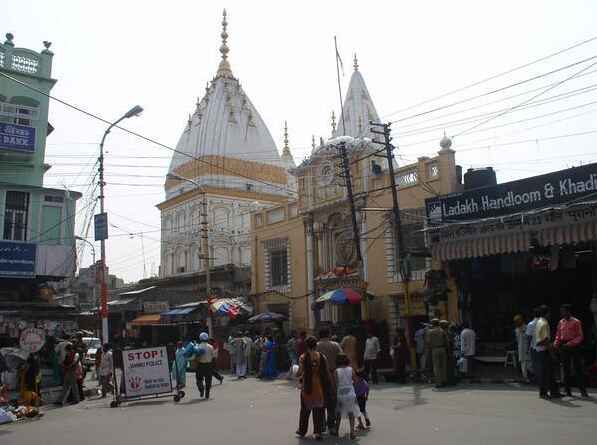
History of Raghunath Temple
Raghunath Temple has been dedicated to Lord Rama who is one of the primary Hindu deities. The temple was constructed by Maharaja Gulab Singh who was the founder of the kingdom of Jammu & Kashmir and the work on the temple began in 1835 A.D. After his death the work was completed by Maharaja Gulab Singh’s son, Maharaja Ranbir Singh. The construction of the temple was finished from 1853 to 1860 A.D. The main temple’s inner wall is covered with gold sheets on the three sides of the temple. The temple also has a vast gallery which has various “lingams” as well as “saligrams” that are placed for the general public as well.
Legend and History of Raghunath Temple
The Raghunath temple has a historical significance and multiple temples surround the main temple these temples are dedicated to the multiple Gods and Goddesses that are connected with the times of the epic Ramayana. This popular temple in Jammu is renowned for the temple’s depiction of Rama Leela and also of Krishna Leela in its beautiful paintings. Prevalent legend suggests that the temple is dedicated to Lord Rama and was originally built by Raja Jagat Singh of Kullu to correct a major wrong that was done by him. The main idol that is placed inside the temple was brought back from Ayodhya which is the birthplace of Lord Rama according to the Ramayana.
The major significance of the Raghunath Temple is seen with seven shrines each of which has its own “Shikhara”, (which deciphers to ‘mountain peak’ in Sanskrit and this refers to rising towers and is a special part of the Hindu temple architecture, especially in northern India). This temple has one of the largest temple complexes in the entire of North India which is located in Jammu city. This temple has multiple Gods enshrined in it but has the presiding deity as Lord Ram who is believed to be an “avatar” or an embodiment of Lord Vishnu.